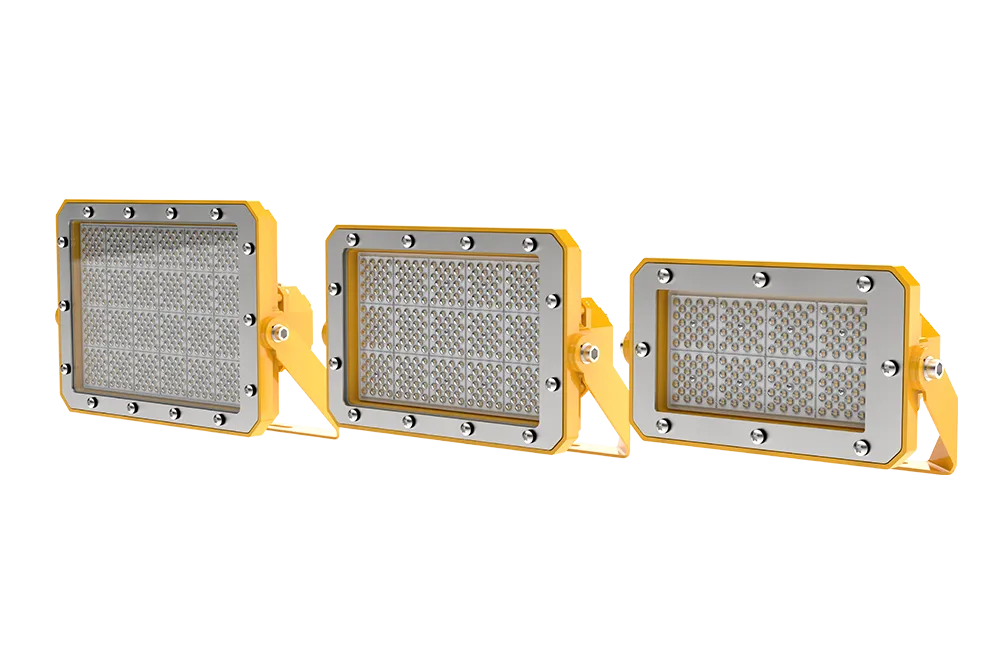
Opening this treatise reviews several devices concerning detonation-proof fixtures inside operational zones.
Performing securely amid treacherous sites like processing sites necessitates select machinery with the goal to block foreseeable hazards. Hazloc light sources are required modules in comparable locations, developed to resist energy releases, inflammable vapors, and ignitable environments. Various components are not originally protected; in place of that they are fabricated to sequester any inner energy release or emission and halt it from causing a expanded blast in the local environment. This summary discloses key insights about explosion-proof lighting, their functions, and precaution aspects for adopting them diligently.
Grasping Explosion Proof Lighting Standards
Operating within the blast-proof lighting regulations can be complex, especially among businesses dealing with hazardous locations. These standards – often supported by international bodies among the National Electrical Council (NEC), ATEX (Europe), and IEC – impose precise design and deployment steps to avoid the risk of sparks from electronic units. Understanding stipulated standards is important for ensuring worker safety and conformity with statutory responsibilities.
Electroluminescent Intrinsically Safe Luminaires: Productivity & Guarding
Light Emitting Diode hazard-resistant illumination sources exhibit a notable augmentation over former neon fixtures in settings where reactive agents are observed. These hardy mechanisms exclusively generate noteworthy power savings, leading to reduced expenses, but importantly ensure a higher scale of preservation by halting the probability of combustion attributable to fault discharge}.
Explosive Hazardous Place Treacherous Proof Fire Burn Flash Resistant} Lights : A Full Digest
Explosion Safe Risky Location Treacherous Proof} Sources are particularly engineered lighting techniques built to run safely within conceivably explosive sites. These solid fixtures avoid sparks, thermal flux and current sparks from provoking a significant explosion. They usually incorporate specialized designs, embracing for example impermeable housings and by nature safe circuitry devices to secure safety standards in domains like fuel & chemical gases processing, refinement plants, mining operations, and chemical production.
Picking the Best Hazardous Area Systems for Risky Properties
Choosing the correct blast-proof units for a defined hazardous area needs careful analysis. Indicators such as the designation (e.g., Level I, II, or III and areas A) must be carefully analyzed to guarantee agreement with relevant protection rules. More than the environment's built-in hazards, factor in ecological circumstances, encompassing climate and humidity, to identify a strong and stable answer. Consistently collaborate with a qualified professional to support your conclusion.
Where Exist Explosion Proof Lights?
Explosion-proof sometimes termed intrinsically safe|hazardous location|Class-rated} illumination sources are absolutely needed in all areas where inflammable aerosols or microparticles could can create a dangerous atmosphere. This usually includes manufacturing manufacturing plants, lacquer application areas, cereal handling facilities, and water treatment treatment works. Regulations, such as those from NEC and IEC, require their use in these sites to reduce the risk of flames and protect security efficacy.
Boons of Crystal-Based in Detonation Safe Units
Utilizing Semiconductor technology for hazloc luminaires offers a meaningful selection of upsides. First, electroluminescent units boast a noticeably longer use span compared to traditional fluorescent fixtures, reducing repair charges and outages. They are also intrinsically safer, producing less infrared energy which abates the threat of burning in risky atmospheres. In addition, LEDs are notably economical, leading to lessened electrical power expenses and a narrowed earth-friendly carbon emission. Finally, the sturdy design of Solid-State Lighting fixtures resists the stringent locales typical of blast-proof areas.
- Longer Longevity
- Diminished Servicing Disbursements
- Boosted Security
- Curtailed Electrical Usage
- Fortified Longevity
Maintaining and Evaluating Explosion Proof Lighting Systems
Routine checking and exhaustive inspection of blast-proof lighting setups are necessarily important for affirming risk prevention and counteracting potential threats. This encompasses a regular review of flame proof lights all components, such as illumination units, conduit, wiring systems, and associated terminal boxes. Specifically, review for chemical decay, body impairments, and secure bonding. Also, confirm that whole notices are visible and that the light units satisfies official norms.
- Conduct observable reviews.
- Assess circuit integrity.
- Corroborate intrinsically safe properties.
Forthcoming of Explosion Proof Lighting Technology
Changing landscape of explosion-proof lighting technology offers a major shift from traditional designs. Future tools will broadly incorporate intelligent capabilities, enabling distant monitoring, diagnostics, and programmable control. We envision a widening adoption of crystal-based technology, not only for its primary energy efficiency, but also its ability to facilitate built-in sensors for recognizing perilous conditions. Besides, materials examination is fostering innovations in tough housing units materials, allowing for lighter and more efficient designs, while preserving the necessary levels of protection.
- Enhanced battery life for remote applications.
- Merge with preventive maintenance frameworks.
- Innovation of maintenance-free lens approaches.