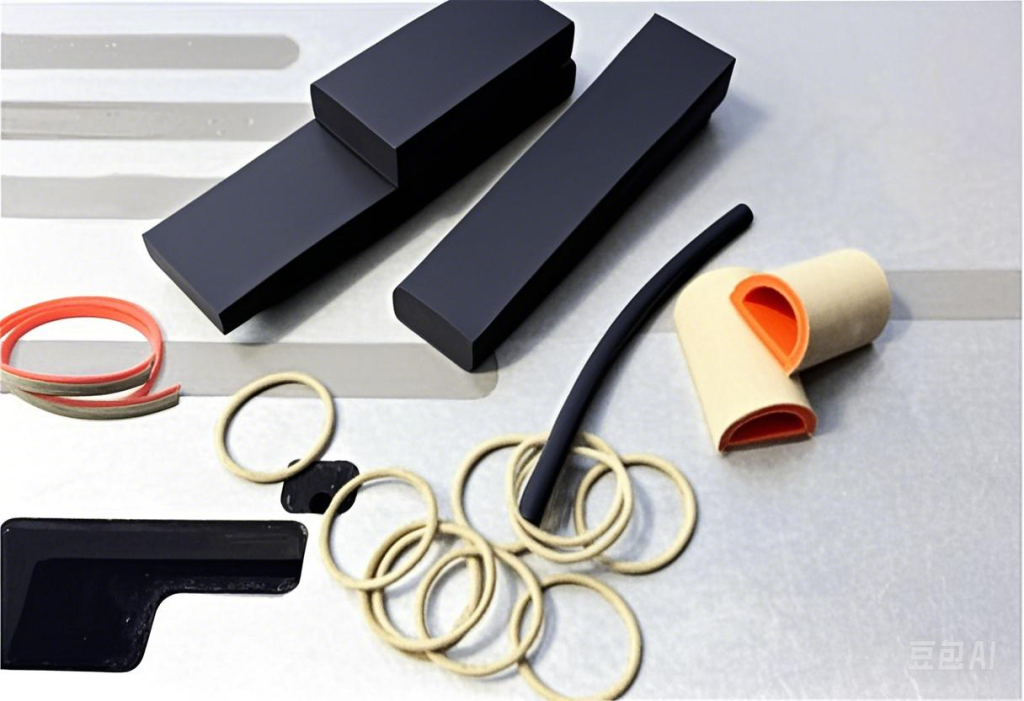
Opening this piece offers information into polymer silicone combined with metallic silver-filled elastomer strips towards electromagnetic interference attenuation.
Silicone elastomers are largely adopted within elastic purposes for reasons of their outstanding sturdiness and elemental tolerance. Still, their natural lack of conductivity impedes their potential in selected digital tasks.
The infusion of electronically active nanometric-sized components, especially Ag-based mixed throughout the PDMS, establishes a harmonious effect facilitating a current-bearing connection allowing for effective EMI attenuation.
This procedures allow apparatuses PDMS to withstand problematic EMI static.
Encapsulating Technological Components: Such Responsibility of Elastomers and Electron-carrying Membranes
Powerful sealing of electrical parts is essential in severe settings. Polymers, with its unmatched elasticity and elemental withstanding, offers remarkable wetness safeguard features. Yet with applications needing electronically active efficiency, conductive seals, often manufactured from electronically active composites, stand as required to reduce EMC clutter and confirm trustworthy operation. The synergy of Polymers coupled with charge transporting closures makes a comprehensive solution to ensuring secure functionality in progressive circuitry.
Signal Attenuation Barriers: Elevating Operation utilizing Electrical Silver-based Rubber together with silicone base
{Consistent electronic electrical noise defense closures operate as necessary for guarding sensitive technological machinery and setups from unwanted emitted conducted noise. Progressive designs often embrace a alloy of conductive Silicone Silicone polymer and Polymer silicone to obtain optimal operation. Conductive SR provides outstanding electrical conductivity, assuring a robust conductive path for reducing unwanted signals. Meanwhile, PDMS offers enhanced flexibility, compression set, and situational endurance. Precise material choice and configuration techniques, such as a light layer of SR within a PDMS matrix, enhance both shielding effectiveness and persistent consistency.
- Evaluate several material combinations relying on use case stipulations
- Verify correct shutting compression for consistent contact
- Inspect pads regularly to assure functionality
The synergistic technique effects in EMI pads that provide peerless protection and endurance.
Polymer silicone Charge-carrying SR Gaskets: Securing Electronics from Disruption
For fragile electronic elements, EMI pollution may lead to detrimental effects, producing for errors plus signal distortion. Polydimethylsiloxane current-carrying SR interfaces furnish an trusted solution via supplying an optimal enclosure versus similar obstructions. Those membranes, ordinarily made containing silicone material rubber loaded with charge-conducting agents, create the low-resistance line to reference, reducing radio noise as well as electromagnetic channel clutter wave. The adaptable layout permits reliable durable seal also upon nonuniform substrates, producing such seals valuable for uses across biomedical machinery, signal transmission installations, combined with assorted technical conditions. Leveraging innovative Polymer silicone electron transmitting SR gasket is proven advanced procedure purposed for ensure platform reliability along with support working dependability.
Maximizing Digital Device Sealing with PDMS-Based Signal Disruption Attenuation
Efficient technological element encapsulation presents a significant concern in cutting-edge planning due to rising radio static. PDMS delivers a unique plan when connected with electronically active additives to construct sturdy EMI filtering layers. This system not only augments equipment effectiveness but also lowers such likelihood of decline causing from peripheral signal noise concerns.
Conductive SR Enhancement Effect in PDMS Closures for Maximum EMI Blocking
Advanced membranes fabricated from polydimethylsiloxane (PDMS), incorporating current conducting fillers, showcase significantly improved defense quality against electromagnetic interference (EMI). The integration of agents like graphitic nanotubes or nickel residues provides a route for electron movement conduction, thereby creating a more sturdy electromagnetic barrier. This electronically conductive increase in gasket operation is critical for key electronic systems requiring notable EMI shielding in various disciplines. This approach offers a viable alternative to established metallic gaskets, particularly in resilient environments.
Deciding on the Right EMI Reduction Gasket: PDMS vs. Conductive SR Options
Opting for apt electrical attenuation gaskets calls for rigorous assessment of diverse grounds. Often, electronically active Silicone Rubber (Silver rubber) was a ordinary pick; however, Poly Silicone polymer (Polymer silicone) emerges as a workable choice, primarily where compression depths are bounded or fabric accord is critical. PDMSO extends exemplary adaptability and can manage closer limits, albeit exhibiting excellent screening operation.
State-of-the-art Covering Systems: Silicone compounds, Current-conducting SR, and Electronic devices Shielding
Advanced shielding approaches are growingly necessary for protecting fragile technological systems. siloxane elastomer, with its excellent malleability and compound tolerance, delivers prime ambient barriers. Furthermore, current-carrying silicone base opens possibilities electrostatic discharge elimination, blocking charge harm occurrences. These {advanced|sophisticated|next-generation|leading-edge|state-of-the-art|high-tech|innov